




How David went from protein bars to cod and ice cream
David launched with one bar in 2024. Two years on it sells frozen cod and ice cream. The products keep changing but the promise never does, and that's the part worth copying.

Most brands are defined by what they sell. David is defined by a number.
That number is protein per calorie. The original bar puts 28 grams of protein into 150 calories, and every product the company has launched since is judged against the same ratio. It's why a protein bar brand ended up selling boiled fish, and why it now sells ice cream. Read the launches as a list of products and they look random. Read them as one promise carried into new categories and they make complete sense.
The brand in brief
David was founded in 2024 by Peter Rahal, who previously built RXBAR, and Zach Ranen (FoodNavigator). It launched direct to consumer in September 2024 with a single bar. Two years later it's in more than 35,000 stores, including Walmart, Target and Costco, and is on track for more than $300 million in revenue this year (FoodBev). In September its parent company, Medici Brands, raised $250 million at a $2.25 billion valuation (Axios).
The range has grown just as fast: frozen cod in July 2025, ice cream in June 2026, ready-to-drink shakes, and a sister sweets brand, HallPass, which arrived at Walmart in August.
The number is the brand
Here's the idea underneath all of it. David doesn't own a category. It owns a measurement.
"Protein bar" is a crowded shelf with a dozen brands making the same claim. "The most protein for the fewest calories" is a standard that can be applied anywhere people eat. That gives David something most brands never have: permission to enter any category where it can beat the incumbents on that one ratio.
Rahal has described the filter plainly. He looks for categories where fat and sugar drive a large share of the calories, where David can make something materially better, and where demand will last (FoodNavigator). Ice cream passes all three. By his own account, donuts might be next.
Most brand extensions fail because the new product borrows the logo and nothing else. David's extensions carry the reason people bought the first product. That's the difference.
Cod: the launch that sold the bar
The cod is the most misunderstood thing David has done.
In July 2025 it started selling wild Alaskan cod online: four 6-ounce fillets for $55, with 23 grams of protein in each (Entrepreneur). The pitch was that boiled cod has slightly more protein per calorie than David's own bar. Plenty of people called it a gimmick, and as a fish business it probably is one. Rahal said the aim was something bold that would spark the conversation.
But look at what it actually did. It took the brand's one claim and proved it in public, by pointing at the one food that only just beats it. Every post about expensive fish was really a post about how good the bar's numbers are. The fish was marketing that happened to be edible.
And it didn't stay a stunt. In May 2026 David followed up with Cod 2.0, a tin of Atlantic cod with two ingredients, cod and salt, and 18 grams of protein for 70 calories (The Dieline). The joke became a product line.
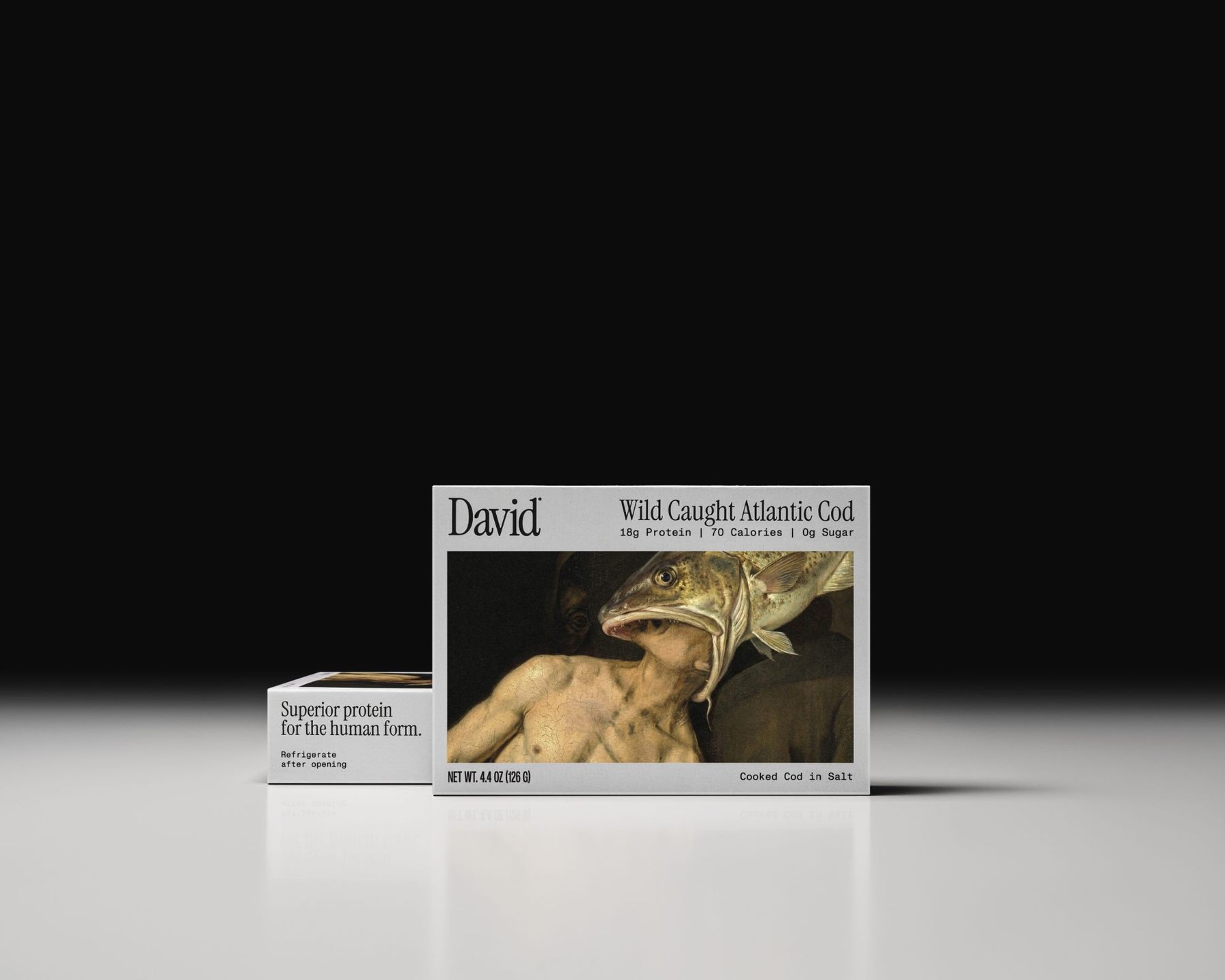
There's a quieter lesson too. The launch followed customer feedback about avoiding processed food (Entrepreneur). Instead of arguing the point, David answered with the least processed product imaginable, a single ingredient, and kept the conversation on its own terms.
Ice cream: the launch that built the business
The ice cream is the opposite. It isn't a stunt. It's the real thing.
The pints launched in June 2026 in four flavours, each with 30 grams of protein, 210 to 260 calories and around two grams of sugar (Dairy Foods). They sold out online in 28 minutes (FoodNavigator).
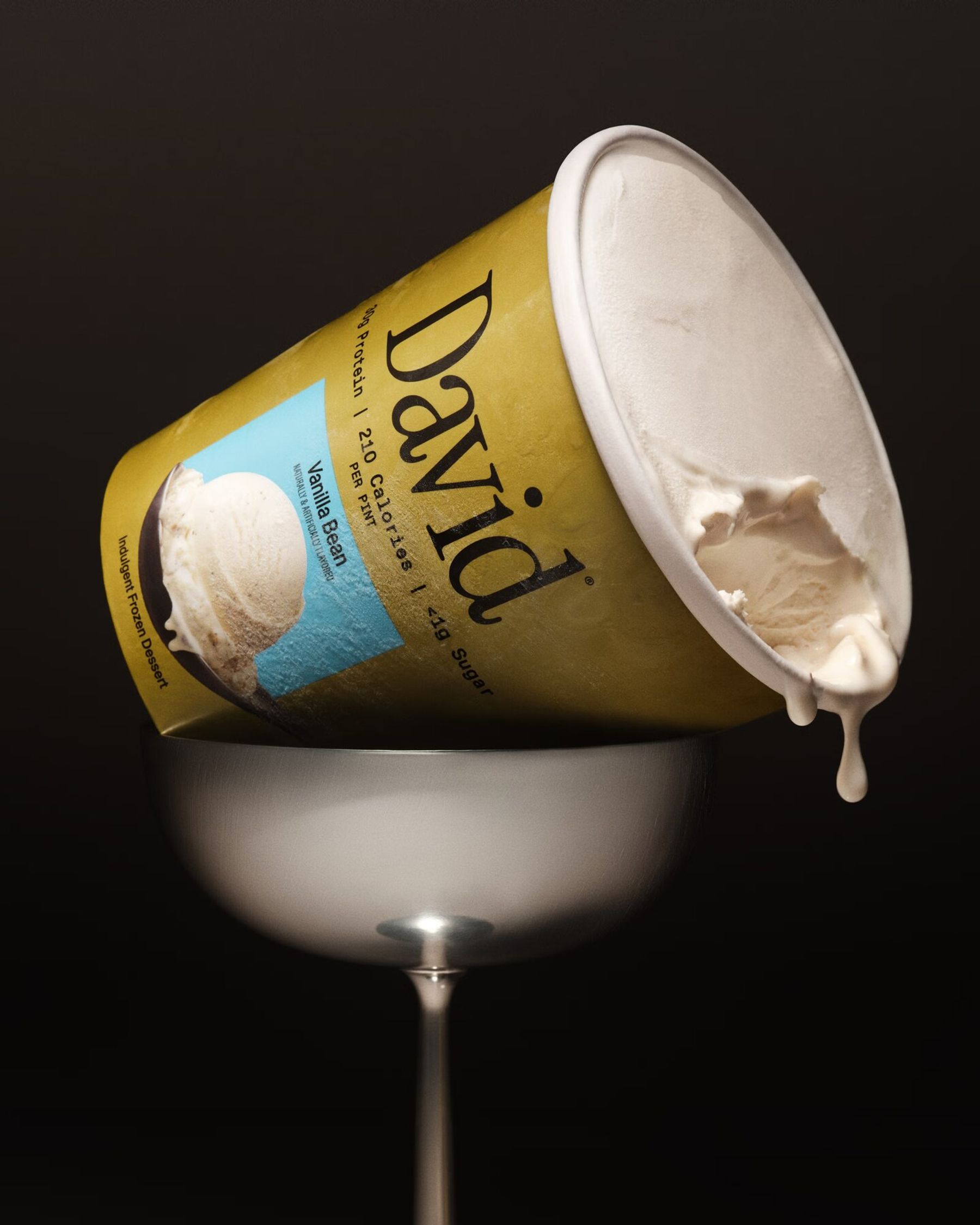
What makes it possible is the part most coverage skips. David bought Epogee, the company behind EPG, a fat substitute with roughly 0.7 calories per gram against nine for ordinary fat. That's how a pint reaches those numbers and still tastes like ice cream. Rahal describes David as a food technology company rather than a protein brand, and argues that branding wins the first purchase but only the product earns the second (FoodNavigator).
That's the real moat. Anyone can copy a minimal wrapper. Nobody can easily copy an ingredient you own.
What we'd steal
Organise around a promise, not a product. Write down the one thing your customers buy you for, as precisely as David's ratio if you can. Then test every new product against it. If a launch doesn't carry the promise, it belongs to a different brand.
Use a stunt to prove the claim, not to replace it. The cod worked because it pointed back at the bar. A launch that only gets attention is a cost. A launch that makes your core claim more believable is an asset.
Launch direct first. Both the cod and the ice cream went through David's own channels before anything else. A sell-out in 28 minutes is demand data, a waitlist and a press story at once, and it costs far less than a national retail launch that doesn't move.
Build something that's hard to copy. Brand gets you through the door. Owning the ingredient, the process or the data keeps everyone else out.
What we wouldn't
A promise built on a number has to survive scrutiny. David's calorie and fat figures for EPG products have been challenged in court, and companies that bought EPG sued after the Epogee deal. David denies the claims and parts of the cases have been dismissed (FoodNavigator), but when your brand is a measurement, how you measure is your reputation.
Stunts have diminishing returns. Boiled cod worked once because nobody saw it coming. The tenth surprise launch is just a launch.
Speed stretches the line. Bars, shakes, fish, ice cream and a sweets brand in two years is a lot for one promise to carry. The ratio holds it together for now. It won't if a product ever compromises it.
The takeaway
David looks like a brand that sells everything. It's really a brand that sells one thing, a better ratio, and lets the format change.
That's open to almost any D2C brand. You don't need your own fat substitute or a $250 million round. You need to know exactly what your customers are buying beyond the product, and the discipline to launch only what keeps that promise.
If you want help finding the promise your brand can carry, an Aperture™ audit is where we'd start.
Are you looking for a new creative growth partner that’s AI first?
Tell us where your brand is and where you want it to go. We’ll show you the engagement that gets it there.

